Lifting Governance in Practice
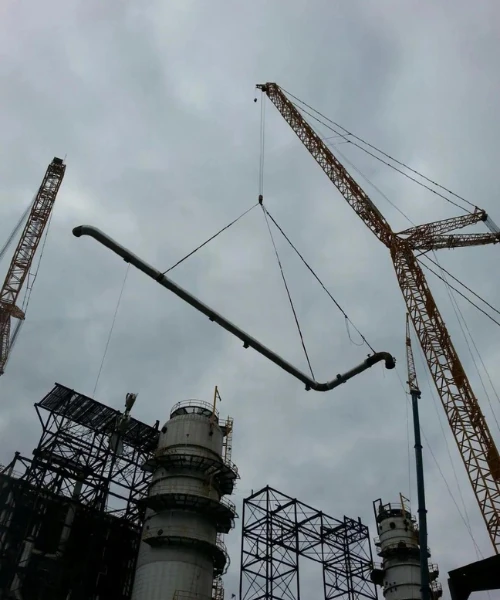
Most Lifting Risk Is Created Before the Lift Begins
Most lifting failures are not caused by equipment or lack of capability.
They are driven by decisions made before execution begins.
On most projects, the fundamentals are already in place.
Procedures exist. Plans are developed. Experienced personnel are involved.
The exposure builds in how decisions are made.
Across operations:
- Risk is interpreted differently from one lift to the next
- Planning rigor shifts depending on the situation
- Critical decisions remain at the execution level
This variability is rarely visible in the moment.
But it is where risk accumulates.
Without a defined control structure, consistency is assumed rather than enforced.
ACLS addresses this by introducing a governance model that brings clarity and control to lifting decisions, ensuring the appropriate level of planning, review, and approval is applied, without disrupting execution.
To address this, lifting decisions must be governed, not left to interpretation.
ACLS applies a structured approach that ensures the appropriate level of planning, review, and approval is determined by the lift itself, not by the individuals performing the work.
This approach is implemented through three core control layers that bring consistency to lifting operations without disrupting execution.
SERVICES
Independent Verification
Control begins before the lift is planned.
ACLS independently verifies that the personnel, equipment, and supporting documentation entering the project are sufficient to support sound and compliant lifting decisions.
This establishes a consistent baseline so that planning, review, and execution are based on reliable inputs, not assumptions.
This includes:
- Verification of operator, rigger, and supervisory qualifications
- Review of crane certifications, inspections, and maintenance status
- Validation of rigging equipment documentation and condition records
- Confirmation of supporting documentation, including insurance and logbooks
This is not certification.
It is independent validation to ensure that lifting decisions are made on accurate, defensible information.

SERVICES
Governance System Development
Verification alone does not establish control.
Control requires a structured system that defines how lifting decisions are made, reviewed, and approved.
ACLS develops and implements a governance framework that aligns planning, risk classification, and approval authority across all lifting activities.
This ensures that the level of control applied is determined by the lift itself, not by the individuals involved or the pace of work.
This includes:
- Structured lift classification based on defined risk thresholds
- Clear escalation criteria for critical and engineered lifts
- Defined approval authority aligned with risk level
- Decision tools, forms, and flowcharts that enforce consistency
The outcome is not additional documentation.
It is a system that ensures lifting decisions are made consistently, compliantly, and at the appropriate level.


SERVICES
Embedded Lifting Authority (SME Oversight)
A defined system establishes control.
Control must then be maintained during execution.
ACLS embeds experienced SMEs to act as a client-side Lifting Authority, ensuring that lifting decisions are applied consistently in the field.
This provides an independent layer of oversight where planning, risk classification, and approval requirements are enforced in real time.
This includes:
- Verification that lift classification and escalation criteria are correctly applied
- Review and authorization of lift plans at the appropriate level
- Confirmation that execution aligns with approved conditions
- Intervention where conditions deviate from plan or defined controls
This is not supervision.
It is embedded authority that ensures lifting governance is maintained at the point of execution.
Lifting risk is not always visible in procedures or plans. A short diagnostic conversation helps determine whether your current approach is providing the level of control required for high-risk lifting operations.

SERVICES
Lifting Failure and Near-Miss Analysis
When a lifting incident or near-miss occurs, the immediate cause is rarely the root issue.
ACLS investigates incidents to identify where decision-making, planning, or oversight broke down before execution.
Our focus is not limited to what failed in the moment.
We analyze how risk was classified, how controls were applied, and where governance did not hold.
The outcome is not just a report.
It is a clear understanding of failure points and the corrective actions required to prevent recurrence.
This includes:
- Root cause analysis focused on decision and control breakdowns
- Review of lift planning, approvals, and execution alignment
- Identification of gaps in governance, competence, or oversight
- Practical recommendations to restore control and prevent repeat events
Most incidents are the result of decisions made well before the lift began.
That is where we focus.